Introduction
Study Buddy
Study Buddy is an app designed to reward students for studying. The more productive and consistent a student is, the more their pet will evolve.
Timeline
3 months
Tools
Figma
Google Forms
Qualtrics
Team
Angelic Cox
Michele Lam
Julie Zhu
Deliverable
Presentation
High-fidelity prototype
Overiew
The Challenge
Design Process
College students struggle with procrastination, but current productivity apps are one-size-fits all, overwhelming, and demotivating.
Empathize
Define
Ideate
Prototype
Test
Research
Interview and Survey Findings
01) Incentive
Procrastination is common among college students, and we saw a trend of students using apps such as Google Calendar to combat it. However, commonly used apps do not provide incentives to complete tasks or hold users accountable.
02) Studying styles
Our findings revealed the variety of study styles among college students. Some prefer short bursts and use the Pomodoro method, while others work in long sessions at a time. Our productivity app aimed to accommodate for this variety.
03) Customization
Users reported leaving other productivity apps as a result of little customization. They reported wanting apps to feel personal to them, suggesting the need for individualization while conforming to existing mental models.
"I feel like I'm always getting calendar invites… if it's not on the calendar, it doesn't happen."
Users heavily depend on their planning tools, such as Google Calendar.
"People think of calendars and the year differently in the brain. Some people have it stacked down, or left to right. I don't like the format of the calendar when it comes down to having to do things. I need the date and nothing else. I just need a list."
Users desire the ability to customize their calendars, both in design and amount of information presented, according to their mental models.
"My French work, we have online exercises that probably take two hours. They're due every three weeks, so I'm not really thinking about those online exercises…So, for stuff like that and long term projects, a reminder in advance would be very helpful."
Users need customizability to create reminders that align with the importance and frequency of tasks.
Key Quotes
Ideation
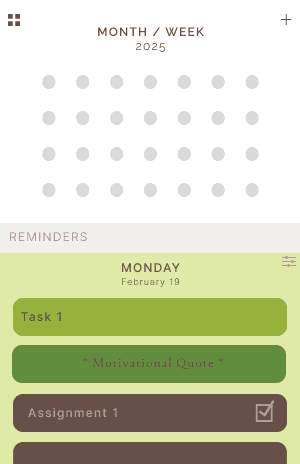
Knowing my team and I wanted to create a productivity app, we tested a few options and consolidated ideas. One of these included a calendar prototype:
Calendar Prototype
Peer Feedback
My team shared design ideas until we settled on an app focused on incentivizing studying. We came to this idea through both a consolidation of proposals and its effectiveness in diminishing procrastination. We narrowed it down to two versions:
01) AI Study Buddy
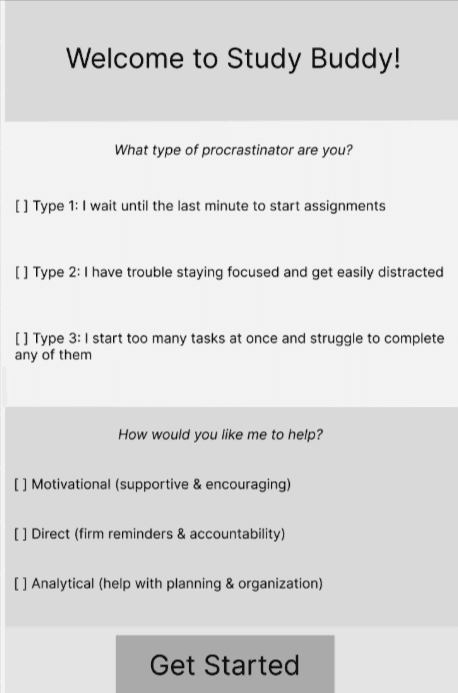
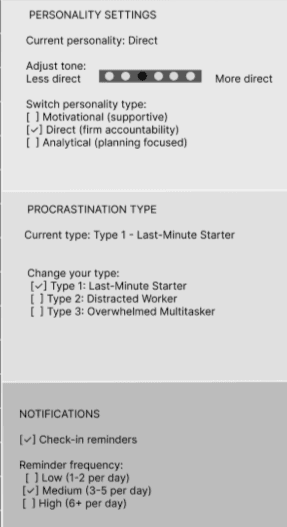
A chat-focused AI bot whose personality changes based on what a user needs as motivation.
02) Reward-based Study Buddy
A character that grows and gains rewards through frequent user interactions and study sessions.
How Might We Statement
How might we build study habits among college students?
A personalized studying experience can increase studying frequency, thus building a habit to counteract procrastination.
Lo-fi prototyping
We created and tested three prototypes to further refine our design:
01) AI Study Buddy
A chat-focused AI bot whose personality changes based on what a user needs as motivation.
02) Reward-based Study Buddy
A character that grows and gains rewards through frequent user interactions and study sessions.
03) AI + Reward-based Study Buddy
A combination of the two.
AI Study Buddy
Key Insights
01) Reduce cognitive load
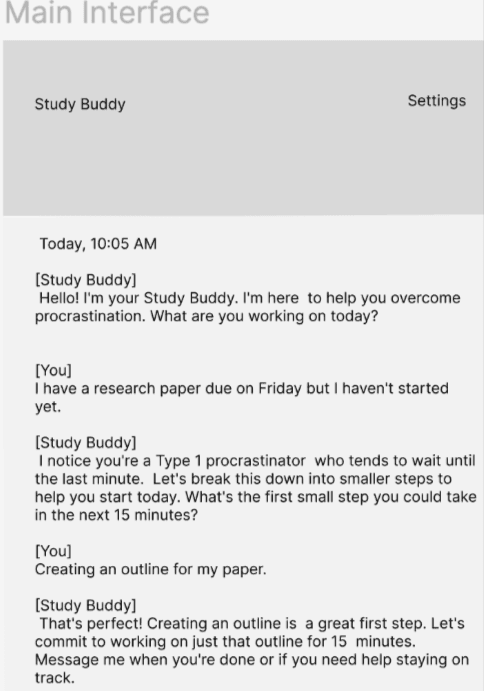
Less set-up would simplify the user experience and make studying more approachable. Users reported other apps having too many distracting features.
02) Personalization
A more personalized experience resonated with users, a key point that would guide our design decisions.
03) Existing mental models
Users reported the chat-only interface made it difficult to track tasks and deadlines. Implementing a calendar view for tasks would better conform to user mental models..
01) Lo-fi prototyping
Reward-based Study Buddy
Key Insights
01) Dynamic feedback
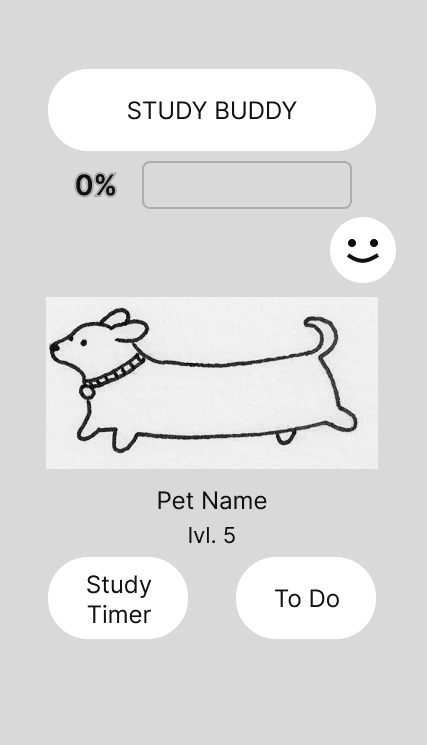
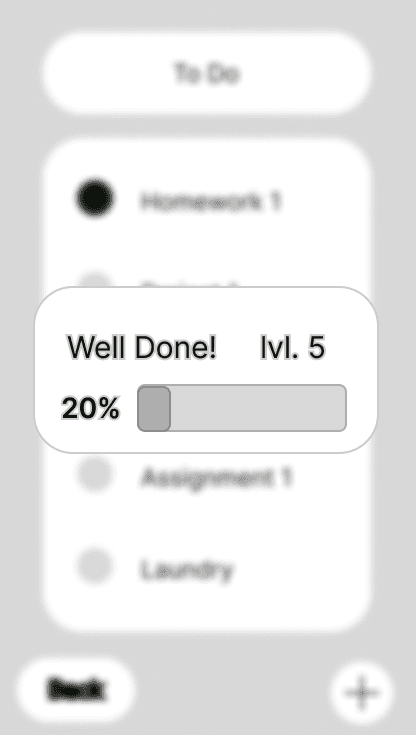
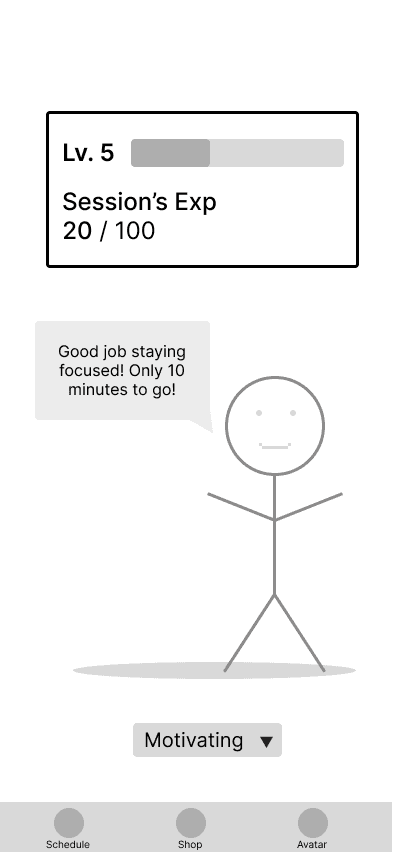
Users did not understand how study habits affect their pet. Implementing dynamic feedback based on user activity or study streaks can reinforce user motivation.
02) Customization options
Users struggled to customize and name their pet, suggesting the current UI is not intuitive.
02) Lo-fi prototyping
AI + Reward-based Study Buddy
Key Insights
01) Existing mental models
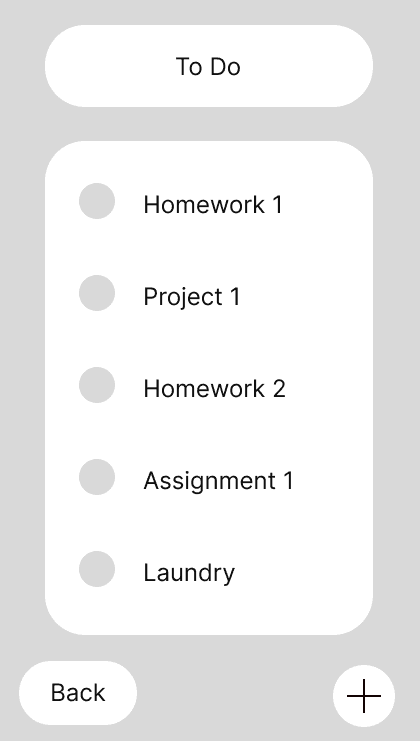
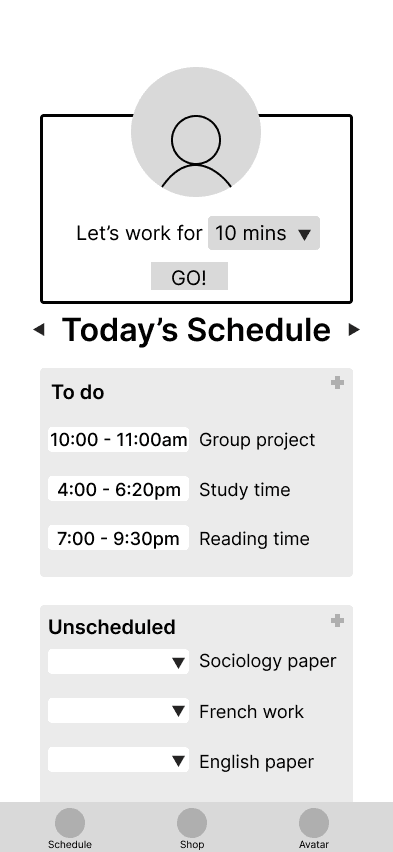
Although a to-do list was implemented, users wanted the option to customize how much information is present. Adding more calendar views can better accommodate users.
02) Improving user flows
Users expressed that individually adding tasks could be difficult and take more time than actually doing the work. In later designs, we wanted to ensure their time spent setting up tasks was worth it.
03) External triggers
Users wanted more motivators, even outside the app through notifications.
03) Lo-fi prototyping
Key Insights Summary
Based on our three rounds of usability testing, we decided to proceed with the Reward-Based Study Buddy. We consolidated our key findings as follows:
01) Personalization
Across all tests, users expressed interest in customization to create a more personalized experience. Higher personalization can lead users to invest in the app and ultimately study more.
02) Reinforcement through rewards
Rewards incentivize users to spend time on the app and study more.
03) User focus
Streamlining features allow users to better focus on their goals and spend more time studying. Better navigation and clear feedback could increase user efficiency.
High-fi prototyping
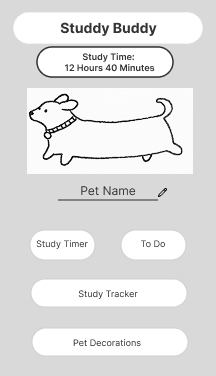
Improved home screen with more options.
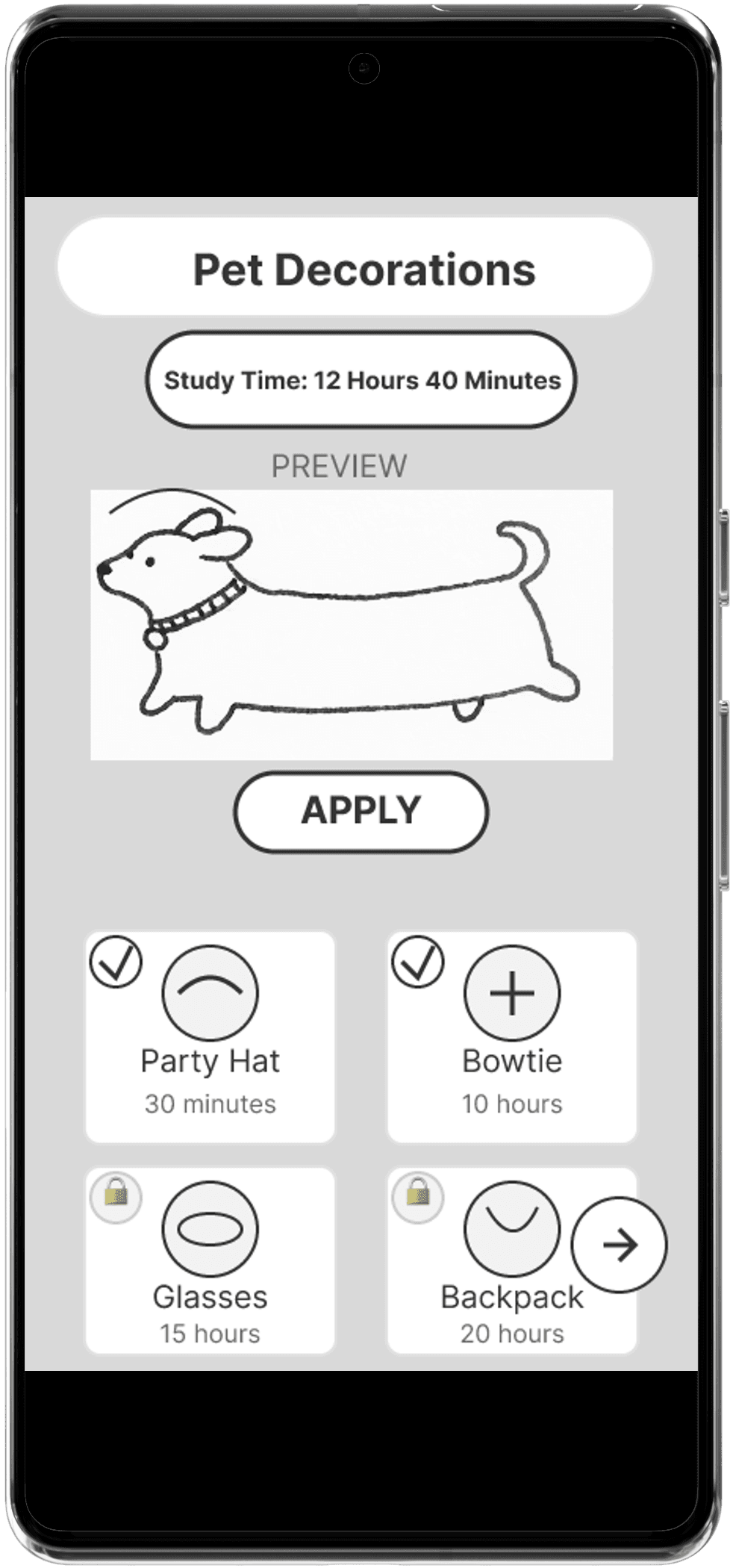
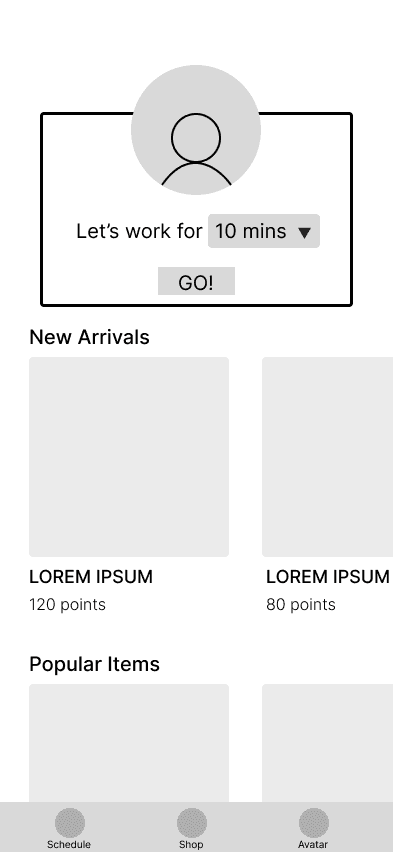
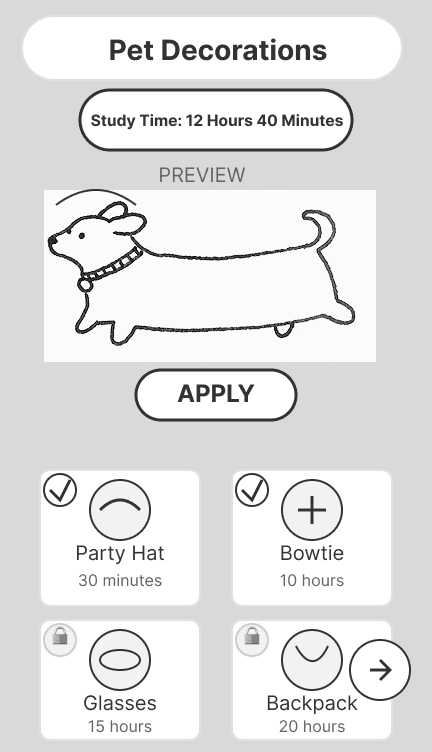
Pet decor to incentivize studying through rewards.
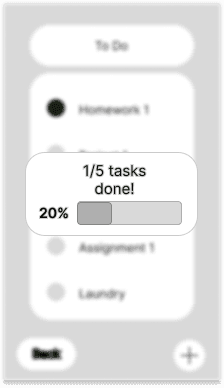
More task views.
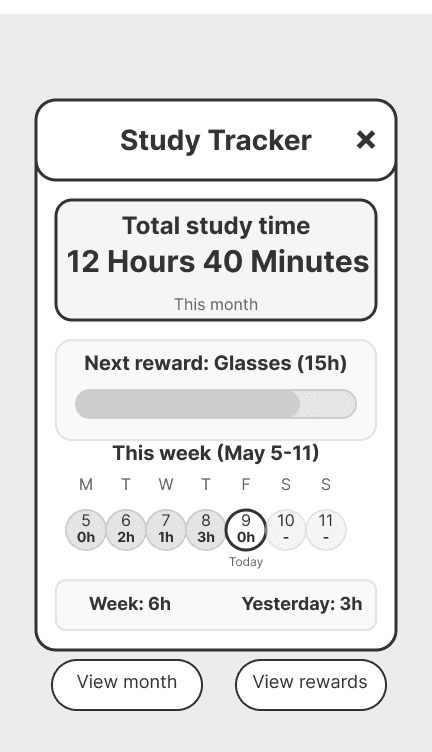
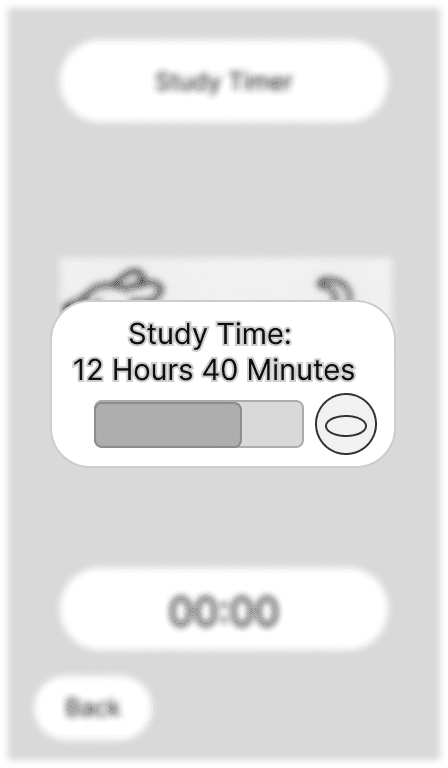
Improved progress metrics and feedback.
Reflection
01) Utilizing mental models
Throughout design iterations and our research, we had to factor in existing mental models such calendar views. In the future, more research on mental models could help guide when to utilize and iterate them.
02) Limited attention
Users, in any app, have limited attention. Understanding how to guide attention, as we did through rewards, can help users invest in an app.
03) Habit formation
In trying to combat procrastination, I gained a deeper understanding of habit formation. I drew heavy inspiration from the Hooked Model—which will continue to guide my design approach in the future.